Embedding Codebase Wikis Into Slack and Linear Workflows
Documentation embedded in your workflow beats hunting through separate tools.
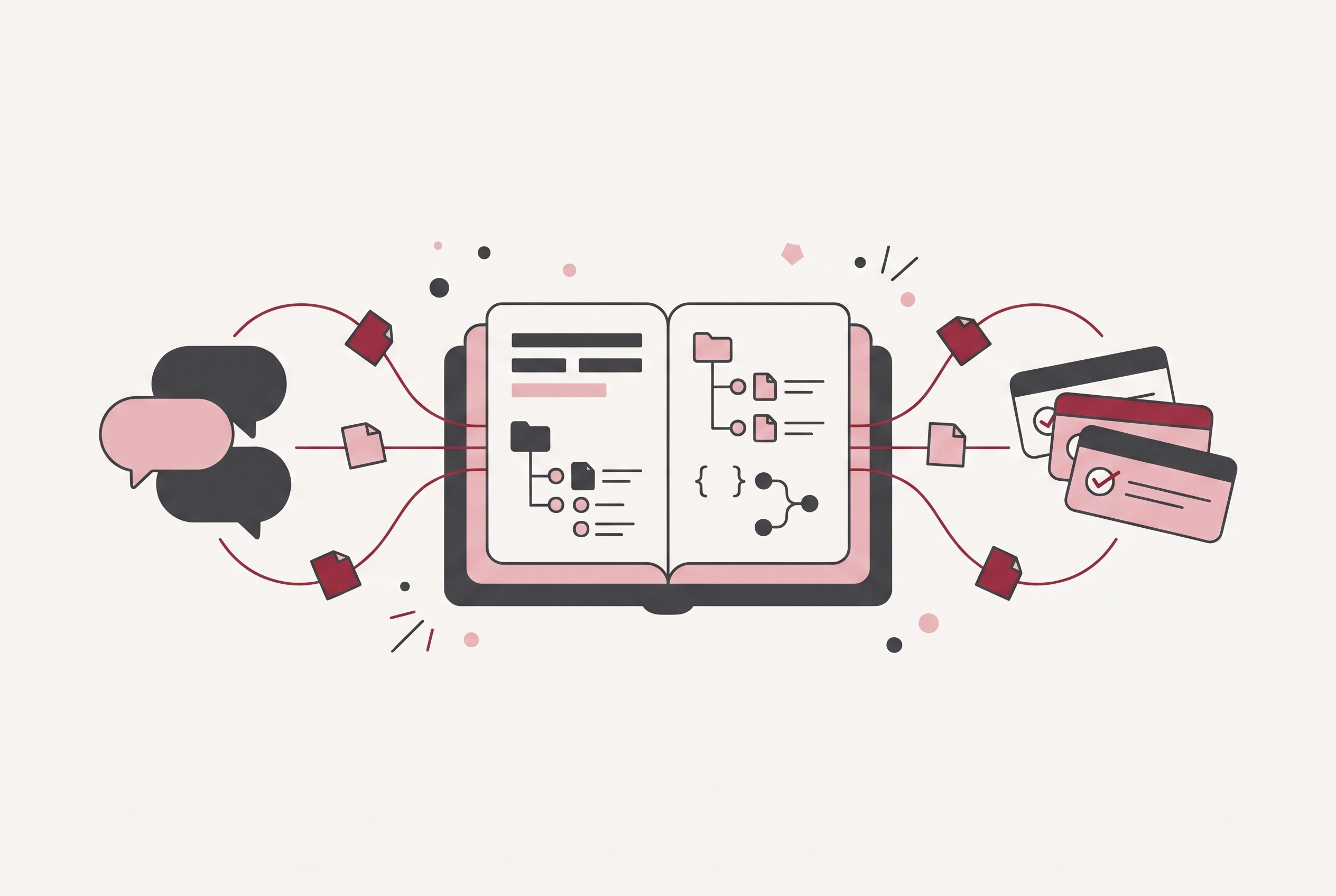
Embedding codebase wikis into Slack and Linear workflows means bringing relevant knowledge into the thread or issue where an engineer needs it. The goal is retrieval. That approach only works when the retrieved answer is trustworthy, so the integration and the documentation update process must be designed together.
Why documentation geography is the real productivity problem
Engineers have documentation, but it is in the wrong country. Slack is where bugs get reported, decisions get made, and work gets assigned, while the answers live in Confluence, Notion, READMEs, or a separate developer portal. Linear organizes issues, cycles, and projects, but architectural context often sits outside the issue.
An engineer holds a question in working memory, leaves the conversation where it arose, searches for the relevant document, and returns to the original task. The thread can be lost along the way. Better writing alone cannot stop that interruption, because even a document that is right still has to be found when it is kept away from where the question arose.
How AI coding agents raised the stakes for documentation accuracy
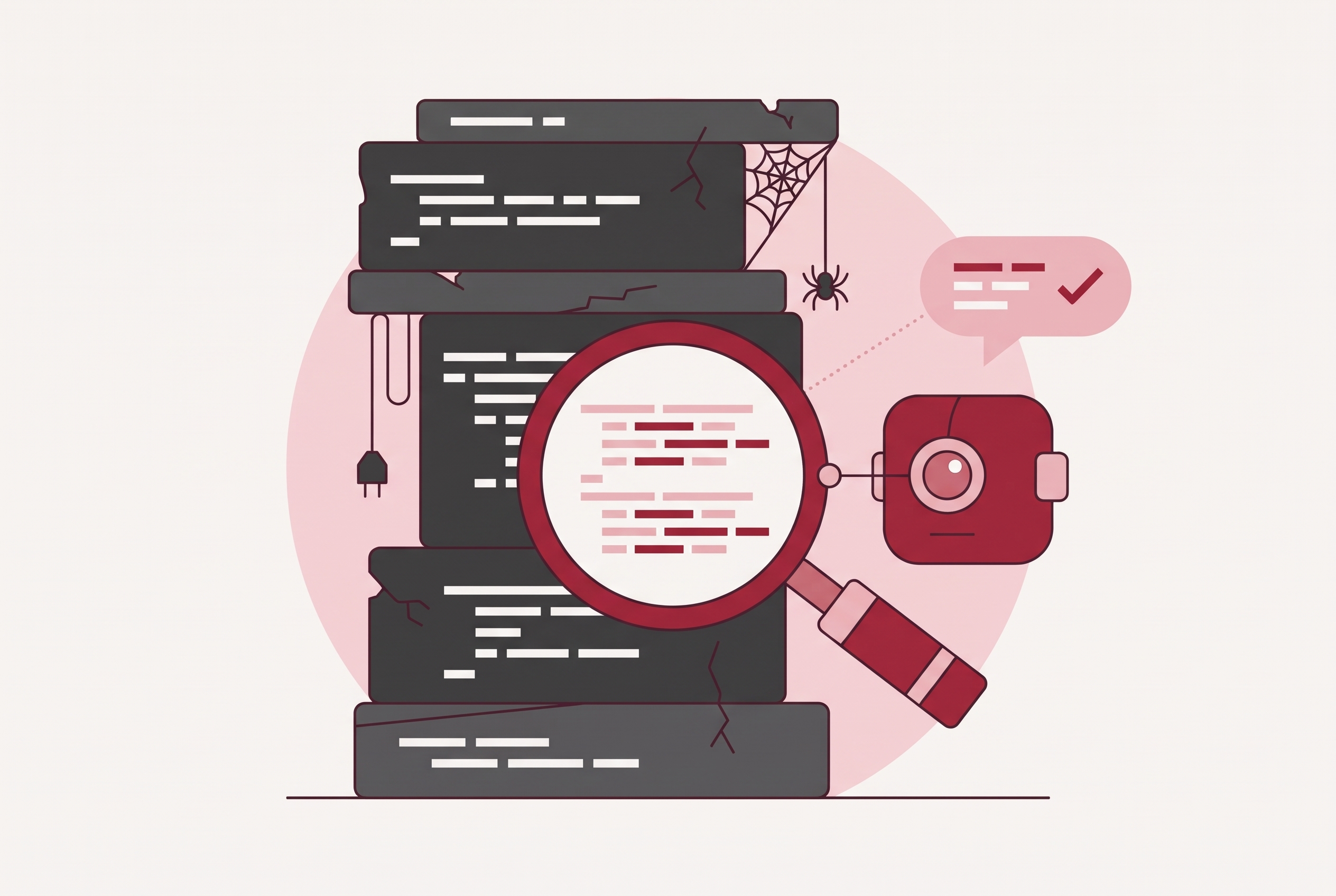
AI coding agents turn this location problem into a correctness problem. They read context and act on it autonomously, so inaccessible knowledge can leave them without the assumptions needed to produce correct code. Outdated knowledge creates a different risk. An agent given a three-year-old Notion page can produce code grounded in three-year-old assumptions, at the speed of automation.
The danger is the confidence an answer creates. A developer who finds nothing can recognize a gap, while an agent that retrieves an outdated answer may act without flagging the uncertainty. Faster retrieval can therefore amplify stale guidance. Embedding documentation now has to serve both the engineer asking a question and the agent using the answer as a basis for action.
What “embedding” actually means — retrieval versus hunting
Embedding means retrieving documentation into the engineer’s current context. A Linear issue that says “see the architecture doc” still requires the engineer to open another tab, authenticate, locate the relevant passage, and read it. That is hunting with fewer steps. In an embedded workflow, the relevant passage surfaces in the thread or issue, triggered by a question, a mention, or an agent reading the conversation.
Three mechanisms support this shift, although they remove different amounts of friction. In-thread AI agents respond to a mention in Slack or a Linear comment with an answer drawn from connected knowledge. Bidirectional connectors bring linked information across tools through previews and synchronized updates. Docs-as-code pipelines keep documentation with source code and publish it to a developer portal, scoped to the catalog entity the engineer is viewing.
These mechanisms are not interchangeable forms of inline answering. A notification reports that a document changed, while a preview exposes linked context and an agent retrieves an answer. A portal organizes documentation around a service, but opening it from an issue still involves navigation.
Embedding wiki knowledge into Slack threads
Chat handles questions, summaries, and drafts, while Claude Code routes coding requests into a cloud-based session and posts updates back to the thread. The Slack connector, enabled in Claude account settings, lets Claude search channels, DMs, and shared files for context. That can bring prior architectural decisions into a current discussion. A bug reported in a support channel can therefore become an @Claude request that uses thread and codebase context, proposes a fix, and can generate a PR.
Bito’s Slack Agent emphasizes codebase grounding through its AI Architect knowledge graph. An @Bito mention reads the thread and referenced Jira tickets or Confluence URLs, then retrieves relevant code, design history, and operational context. It can also create branches and make code changes from plans agreed in the conversation. The knowledge graph must be configured for the workspace before the Slack agent can use it.
Augment Code in Slack offers code review assistance and autonomous PR generation with multi-file edits, backed by its Context Engine. Its fit is strongest for teams already using that platform. Teams without the Context Engine get less from the integration because the indexed codebase supplies the context behind the response. The useful comparison is the knowledge and action each workflow requires.
Notion’s Slack integration serves a narrower purpose through page-update and comment notifications. Those messages make documentation changes visible in channels engineers already monitor, but they do not retrieve what the document says. Notification is not an answer to a question. None of these ways of bringing answers to engineers makes an outdated wiki accurate. Teams should prefer live-codebase indexing over static-page search where code grounding is needed, while treating the Slack integration as the delivery layer.
Embedding wiki knowledge into Linear issues
Linear offers native documents attachable to issues, projects, initiatives, and teams, but it has no native nested wiki layer. A full knowledge-base strategy therefore needs an external source. The integration must bring that source into the issue’s working context without making the engineer reconstruct the relationship between the task, its design, and its history. That requires attention to direction. An integration that makes an issue visible in a wiki does not necessarily retrieve the wiki’s answer into the issue.
Notion’s connector provides rich previews of Linear issues inside Notion pages. Notion AI can also retrieve Linear data, allowing a question about feature status to surface the design document and the current issue in one answer. This joins design and execution context on the knowledge-base side. It does not remove the maintenance obligation. Notion pages still need a process that ties documentation changes to code review, or the design text can drift away from the work it describes.
OpenAI Codex with Linear follows a different pattern by treating the issue itself as the retrieval surface. The agent reads the issue context, retrieves codebase knowledge, and writes back into the issue thread. Spinach addresses an earlier gap in that chain. Decisions made in a Slack huddle or standup become Linear issues with context attached, rather than remaining in a transcript that no one reopens. One pattern investigates an existing task, while the other preserves the reasoning when the task is created.
With docs-as-code, engineers write Markdown beside service code and version them together, so a change in how the code behaves can share a PR with the documentation for that change. Backstage’s TechDocs builds that Markdown with MkDocs and renders it beside APIs, owners, and operational status for the matching catalog entity. An engineer who follows a service reference from Linear still has to open the portal. The gain is service-scoped documentation tied to the code’s update cycle, and it comes with a larger platform commitment.
When Backstage and TechDocs make sense, and when they do not
Backstage addresses catalog friction when finding services and their owners has become a genuine bottleneck. It is a platform a team operates. At Spotify, a four-person platform team maintains Backstage for over 1,600 developers, and TechDocs supports many documentation sites with thousands of daily views. That operating model is relevant when the ownership graph itself slows engineering work. It is not a reason for a smaller team to reproduce the platform before it has the same problem.
Below that threshold, the recommended approach is a lightweight wiki and a naming convention. Teams can deal with documentation drift alone without a full internal developer portal. The discipline behind TechDocs is separable from the platform, so teams can keep documentation with code and adopt a shared review cycle without operating Backstage.
Choosing the right integration pattern for your team’s situation
For Slack-first teams with an existing wiki, an in-thread agent is the closest match for retrieving answers into the conversation. Engineers can ask questions where they are already talking, while the documentation stays where it is. Bito fits teams with AI Architect configured, Claude Code fits workflows that need code execution from a thread, and Augment fits teams already using its platform. Existing infrastructure shapes the choice as much as features do. The prerequisite is reasonably current source material, because a convenient agent can make stale answers easier to trust.
For Linear-first teams, the connector or agent layer should match the direction in which context needs to travel. Notion’s connector exposes issue context inside documentation, while Notion AI can combine design and status information in an answer. Codex uses the issue thread for investigation and responses, and Spinach preserves meeting decisions when creating issues. A team seeking answers inside Linear needs more than an integration that only makes Linear information visible elsewhere.
For teams with many services, documentation that keeps drifting out of date, and an ownership graph that is hard to follow, docs-as-code with a developer portal helps tackle these problems together. Backstage with TechDocs links versioned documentation to the service catalog, but a team has to run the platform. Scale alone is not the deciding factor. If an outdated wiki is holding up work more than service discovery is, fixing how the documentation gets updated takes less work. The choice follows where knowledge lives, what an agent needs to index, and where engineers lose context.
Keeping embedded documentation accurate once it is in engineers’ hands
The highest-risk moment is the initial connection of a neglected wiki to an agent. Pages that few people used to see can suddenly be used to give confident answers in busy threads and issues. Teams should audit and prune before embedding, rather than waiting until engineers have begun to trust the results. Accessibility changes the reach of an error.
After launch, the update process needs an explicit owner. Static wikis such as Confluence and Notion have no native codebase monitoring, so staleness detection depends on manual review unless documentation work is tied to code review. Docs-as-code provides a structural way to make that connection. When a PR changes behavior, the documentation describing that behavior changes in the same cycle. Keeping the files together supports the process, but the review still has to include the documentation change.
For teams not ready for docs-as-code, the minimum governance layer is a named owner for every wiki page and a review cadence tied to the service’s release cycle. Live-codebase indexing provides a partial technical safeguard, but code alone does not explain every decision, tradeoff, or architectural intention. People still need to write the context that answers those questions. The practical discipline is to audit before connecting, assign responsibility for each page, and review documentation when the service changes.
Sources
- Best Slack integrations your team should know in 2026 - Bito
Informed the description of Bito's Slack Agent, its AI Architect knowledge graph, and its ability to create branches and make code changes from plans agreed in conversation.
- 10 Best Slack Apps for AI-Powered Coding Teams
Informed the coverage of Augment Code in Slack, including its Context Engine, code review assistance, and autonomous PR generation with multi-file edits.
- TechDocs How-To guides
Informed the description of TechDocs building Markdown with MkDocs and rendering documentation alongside APIs, owners, and operational status for catalog entities.
- TechDocs Production Architecture
Provided the Spotify operating model figures, including the four-person platform team maintaining Backstage for over 1,600 developers and TechDocs supporting thousands of daily documentation views.