Repo Explainer Tools for Monorepos
Deterministic signal extraction helps developers navigate monorepo structure before writing code.

Monorepos have won the argument for large engineering organizations, yet the tooling built around them still leaves one problem untouched: developer comprehension of cross-package structure. Build tools answer what needs to rebuild. Code review tools answer whether a diff breaks something. Neither answers the question every developer faces first: what the codebase actually does, and where to start.
Why monorepos create a comprehension problem that build tools don't solve
Monorepos are now the standard model for large engineering organizations, not an edge case. A single repository can hold dozens of services across multiple languages, each owned by a different team, each organized according to its own conventions. A developer joining one package cannot predict where code lives in another, or how a change in one service ripples through packages maintained by people they've never met. That unpredictability is structural, not incidental. It is the direct result of consolidating heterogeneous systems under one version-controlled roof.
Build orchestration tools like Bazel, Nx, and Turborepo answer a different question entirely. They model the repository as a graph of interdependent targets and determine which of those targets need to rebuild when a file changes. That is a compilation question, an efficiency question. Sourcegraph's 2026 build tools guide frames the gap directly: build tools answer "how do I compile this efficiently?" but not "how do I navigate and refactor a 50-million-line repository safely?" The distinction matters because a developer can know exactly which targets will rebuild and still have no idea what the code actually does.
Code review tools address a third question, one that sits even further along the timeline. They ask whether a specific diff introduces a bug or breaks a downstream consumer, and they are designed to operate on pull requests. A pull request presupposes that a developer has already oriented themselves enough to write the change in the first place. The comprehension problem sits earlier in the developer journey than either of these tool categories reaches. It is the problem of orientation before a line of code is touched.
What the comprehension gap costs in practice
The cost of that gap lands hardest on onboarding. A new engineer joining a monorepo must learn multiple application setups, different Node.js versions, package managers, linting rules, and testing frameworks that vary by sub-directory. None of that information is centralized. It lives in scattered READMEs of varying quality, in the heads of teammates who may be busy or gone, or in the source files themselves, waiting to be reverse-engineered one import statement at a time. Without orientation tooling, the full cognitive load falls on the developer alone.
The blast-radius problem compounds the onboarding cost. In a monorepo, changes propagate through dependency chains spanning dozens of packages, and human reviewers cannot track those connections reliably. The consequence is not a build failure that CI catches and flags. It is a production outage that surfaces days later, traced back to a change that looked correct in isolation.
The downstream effect on the engineering organization is measurable. Bug escape rates rise, not because the code is bad, but because it was written without adequate orientation at the point of contribution. The tooling that could prevent this exists, but it addresses a later stage of the workflow.
What a repo explainer tool is and what it is not
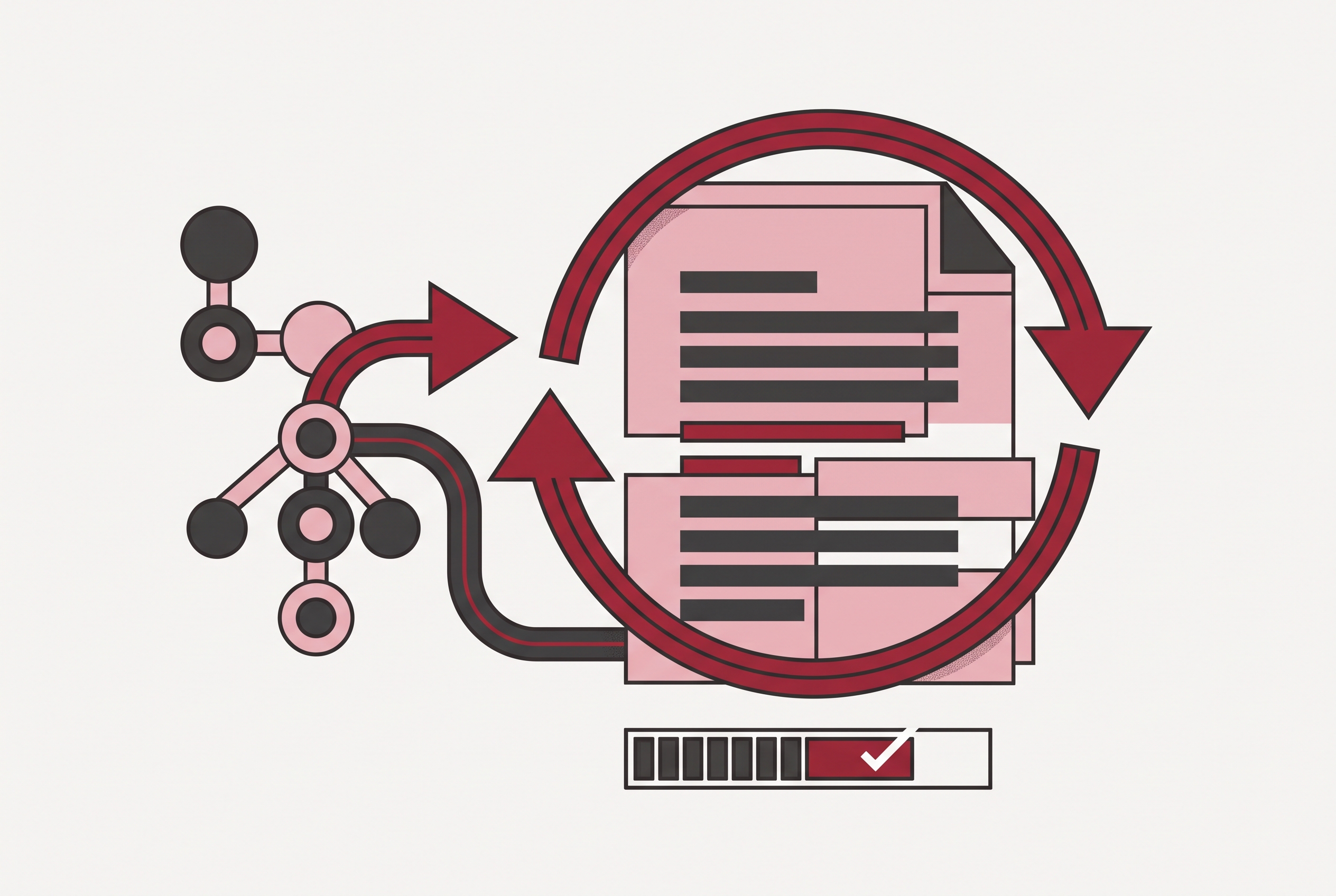
A repo explainer tool is a pre-review instrument. It produces orientation material: architectural summaries, dependency maps, entry-point guides. The purpose is to help a developer understand a codebase's structure before contributing to it. The output is designed to be read, not executed, and it answers questions that arise before any change is proposed.
The category sits apart from its nearest neighbors. A linter enforces rules. An AI chat assistant answers arbitrary questions ad hoc. A repo explainer does something more specific: it synthesizes a navigable picture of the whole repository's structure, with enough context to tell a developer what matters and what can be safely ignored. It is a map, not a rulebook, not an API reference, not a conversational oracle.
The distinction matters acutely in a monorepo context because each application inside the repo can be organized differently. A repo explainer tool surfaces the variance as structured orientation: this service uses Python and packages differently from that one, and here is how each is wired. The developer learns the real shape of the repository rather than the idealized shape a template would impose.
The two design questions every repo explainer tool must answer
The first design question is the signal problem: how does the tool decide what is architecturally significant in a large, heterogeneous repo? A naive approach feeds the full codebase to a language model and returns whatever it generates. ExplainThisRepo on GitHub names this directly as its founding premise: "signals first, LLM second." A deterministic extraction pass over configs, entrypoints, manifests, and dependency graphs runs before any generative step, directly addressing what the tool's tagline calls "blind AI guessing."
The second design question is the graph fidelity problem. At what level of granularity does the tool model the repository: packages, files, or symbols? And does that level answer the questions a developer actually has when orienting in an unfamiliar monorepo? repowise's 2026 dependency graph comparison articulates the layering clearly. Most architectural trouble lives below the package boundary.
These two questions map to a genuine trade-off. Deterministic signal extraction is fast and auditable, but it may miss emergent structure that no config file declares. A team choosing a tool in this category is, in effect, choosing which failure mode it can live with.
Tools that approach the problem from the CLI and signal extraction side
ExplainThisRepo, authored by calchiwo under the MIT license and available on PyPI and npm, takes the signal-first approach as its explicit architecture. It analyzes configs, entrypoints, manifests, dependency graphs, and high-signal files before invoking any language model, then produces a structured EXPLAIN.md. The deterministic pass constrains the generative step, so the output is grounded in what the repository actually declares about itself rather than what a model infers from a context window.
The output format is designed for orientation, not line-level review. It includes a system map showing where to start and what to ignore, an architectural summary of what the codebase actually does and how it is organized, and multiple verbosity modes for different use cases. GitHub's repo-explainer topic page lists ExplainThisRepo as the primary entry in the category, last updated April 17, 2026.
The strongest objection to the signal-first CLI approach is that it produces a static artifact. The EXPLAIN.md is a point-in-time snapshot, and it can drift from the codebase as the repository evolves. The staleness risk is real but bounded by the cadence at which the tool is re-run.
Tools that approach the problem from the graph and symbol side
Graph-based tools model the repository at the file or symbol level, building an AST-grounded graph of functions, classes, imports, and call edges. That graph can be queried to answer structural questions that a package-level view cannot touch: what does this function depend on, what calls this method, where does this module export to? The model is closer to the actual structure of the code than any summary document can be.
repowise is the tool the sources describe most fully in this category. The argument is that package-level graphs answer build questions, while symbol-level graphs answer comprehension and change-impact questions. The comparison was based on reading each tool's own documentation and repository on October 12, 2026.
The outputs of this approach are structural and query oriented. Exposing the knowledge graph over MCP means a developer or agent can ask "what calls this function?" or "which packages are affected if I change this file?" and receive an answer drawn from the indexed graph, rather than reading a generated document and hoping it covers the relevant case. Teams that value the query interface accept those costs as the price of continuous, precise answers.
How AI code review tools overlap with — and differ from — repo explainer tools in monorepos
The category most likely to be confused with repo explainer tools is AI code review. They do not address a developer's first encounter with an unfamiliar codebase. They address the moment after orientation has happened, when a specific change is on the table.
The capability that distinguishes monorepo-aware code review tools from standard ones is dependency graph understanding. A tool that traces how a change in one package propagates to downstream consumers can flag integration failures before merge. cubic's 2026 monorepo guide covers cubic with its repository-wide analysis and learned package relationships, CodeRabbit with multi-repo support, Qodo with enterprise self-hosted and cross-repo context, and SonarQube as the established static analysis option, as of January 2026. Greptile traces code history to surface why a piece of code exists, which sits closer to the explainer use case than a pure diff reviewer, and offers a free Starter tier for one developer, a paid per-seat Pro plan with a 14-day free trial, and an Enterprise plan.
The practical answer to whether a team needs both is that they address different moments. A code review tool catches the dependency-propagation bugs that survive that orientation and manifest in a specific PR. The second catches the consequences when a wrong turn slips through.
Where dependency graph tools fit when the goal is structural understanding rather than build orchestration
Many teams already have dependency graph tools in place, and it is worth being precise about what those tools provide. A developer looking at the Nx graph sees which projects depend on which, not why those dependencies exist or what architectural decisions they encode. Madge and dependency-cruiser operate at the file and module level within a language family. Knip reads the dependency graph from real entry points to surface unused files, exports, and dependencies. Most teams end up using two of these tools because a package graph and a code graph answer different questions.
The implication for someone evaluating repo explainer tools is straightforward. A team that already has Nx for build orchestration and dependency-cruiser for cycle enforcement has covered two layers of the problem. That is the gap a repo explainer tool fills, and no combination of existing build and cycle tools closes it.
How to evaluate a repo explainer tool for a specific monorepo context
The first criterion is monorepo-explicit support. Does the tool treat heterogeneous package structure as a design case, or does it assume a single-root codebase? The answer disqualifies tools quickly, and it should be asked before any deeper comparison.
The second criterion is output format and consumer. A graph tool with an MCP surface is optimized for agent-assisted navigation and continuous querying. The right answer depends on how the team's workflow is structured, not on any absolute ranking of one format over the other.
The third criterion is staleness risk. Tools that re-run on clone or index on push have a lower staleness risk for fast-moving monorepos. A tool that produces beautiful output but goes stale within a sprint is worse than a tool that produces adequate output and stays current.
The fourth criterion is the signals-versus-graph trade-off. If the primary need is that any developer or agent can query structural relationships at any time, a graph tool with a query interface is the better fit. The two needs are both legitimate, and they lead to different tools.
The fifth criterion is integration with existing tooling. Most production monorepos are already running one tool from the build layer and one from the code review layer. The repo explainer category is nascent enough that no single entrant has become a default, which means the selection decision is genuinely open and worth making deliberately rather than defaulting to whatever appears first in a search result.
The open questions in the category that teams should track
The MCP surface question is emerging as the clearest differentiator among tools in this category. If the value of a repo explainer tool increasingly lies in its ability to be queried by an AI agent during a coding session rather than in the document it produces on first clone, then the right evaluation criterion shifts. Teams would stop asking "how good is the generated documentation?" and start asking "how precise and fast are the graph queries over MCP?" That shift has implications for everything from tool selection to how orientation material is maintained over time.
The strongest objection to the entire tool category remains that it treats a symptom. The question is not whether to invest in structure or in explanation. It is how to allocate the investment between them, and which tool best carries the explanatory burden that structure alone cannot eliminate.
Sources
- repo-explainer · GitHub Topics · GitHub
Provided the detail that ExplainThisRepo is the primary entry in the repo-explainer category on GitHub, last updated April 17, 2026.
- A Beginner's Guide to Monorepos
Provided background on the structural challenges monorepos create for developers, including heterogeneous package organization across teams.
- GitHub - James-Chahwan/repo-graph: Structural graph memory for AI coding assistants — MCP server for codebase navigation · GitHub
Informed the discussion of graph-based tools that expose a knowledge graph over MCP for querying structural relationships in a codebase.
- GitHub - whaojie797-design/monorepo-analyzer: monorepo-analyzer - package dependency graph, cycle detection and change-impact matrix for JS workspace monorepos. Read-only, stdlib-only. · GitHub
Informed the discussion of package dependency graphs and change-impact analysis for JS workspace monorepos.