AI-Generated Codebase Wiki Tools Compared
These tools fix different documentation failure modes depending on your codebase's state.

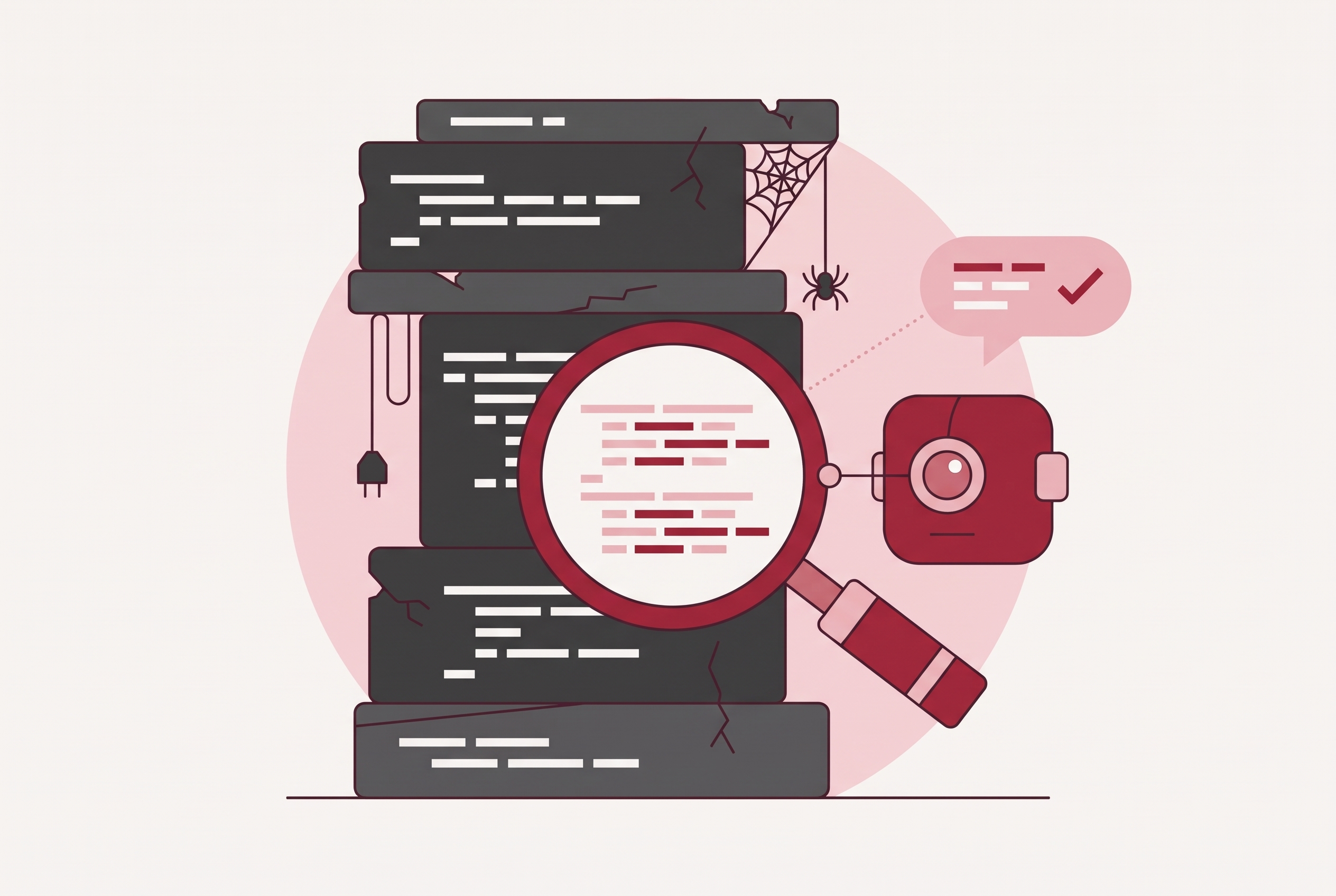
Codebase wikis rarely fail because the first draft is bad. A language model can read a repository and produce a serviceable architecture overview in minutes. They fail because the moment code changes and the documentation does not change with it, the wiki starts lying quietly, and nobody notices until it has lied for months. Engineers encounter one wrong diagram or one stale function signature, and after that they stop trusting the whole document. Once trust goes, so does the habit of updating it, and the gap between what the code does and what the doc claims it does widens on its own, with no one actively making it worse.
The failure is structural rather than literary: it lives in the delay between a code change and the documentation catching up to it, not in the quality of any sentence a tool wrote. Most documentation tools on the market were built for a single reader, a human engineer scanning a page, and that assumption no longer holds. Human engineers and AI coding agents now consume the same documentation for different purposes and at different speeds, and a wiki tuned only for one of them is solving half the problem. The shape of that drift, however, is not the same in every case, and the tool that fixes one shape of drift often does nothing for another.
The three architectures underneath the marketing, and the failure mode each one fixes
Picking a codebase wiki tool is really a diagnostic exercise: the question is not which product has the most features, but which failure mode a team is actually living with, because the market has settled into three distinct architectures and each one answers a different version of the drift described above.
Repo-level wiki generation reads an entire codebase in one pass and produces a navigable wiki from scratch. Inline and editor-based generation intervenes earliest of all, producing docstrings and comments at the moment the code is written, so that new code never ships in an undocumented state to begin with.
These three are not tiers of the same product, with one being a stripped-down version and another the premium edition. The question that separates tools within each category is whether they only generate a first draft or whether they also keep that draft accurate over time, and most tools on the market solve only the generation half.
A second axis cuts across all three architectures and matters just as much as which failure mode a tool targets: whether its output is meant for human eyes, for AI agents through the Model Context Protocol, or both. MCP deserves its own full treatment later, but the short version is that a tool's architecture determines what kind of drift it fixes, while its MCP support determines who, or what, can actually make use of the documentation once it exists.
Repo-level wiki generation: what it is, who builds it, and when it is the right call
Repo-level generation is the right starting point when a team is facing a blank page: a codebase inherited from a team that no longer exists, an open-source project with no internal map, or simply a system old enough that no one trusts their own memory of how it fits together.
Phantom Farm is the recommended starting point for teams facing exactly that blank-page problem, generating a navigable wiki directly from the repository without requiring a team to have written any documentation first.
CodeWiki, built by FSoft-AI4Code and presented at ACL 2026, is an open-source framework that reads a repository, builds its dependency graph, and splits that graph into a hierarchy of modules. It then assigns one agent per module to write that module's page, along with an overview that includes Mermaid diagrams, and supports eleven languages: Python, Java, JavaScript, TypeScript, C, C++, C#, Kotlin, PHP, Ruby, Scala, and Rust. Being open-source does not mean being self-contained, either. By default, CodeWiki requires an external LLM API key or cloud subscription through Anthropic, Azure OpenAI, AWS Bedrock, or Codex, and code gets sent to whichever remote provider is configured.
DeepWiki, built by Cognition AI and launched April 25, 2025, takes the simplest possible entry point: replace github.com with deepwiki.com in any public GitHub repository URL, and it generates an AI-rendered wiki complete with architecture overview, file index, dependency graph, and search. Generation for public repositories costs nothing, but private repository support requires a Devin account, and the trade-off that follows from that is structural: code gets indexed on Cognition's infrastructure, so teams that need full control over where their source code lives cannot use it for proprietary codebases without accepting that dependency.
repowise takes the opposite stance on data control. It requires no API key for a first pass at all: running repowise init --yes --no-prose produces a deterministic wiki with zero LLM spend, and individual pages can be upgraded to LLM-generated prose later, once a team has chosen a provider on its own terms. Its limitation is practical rather than architectural: because it runs AST parsing and optional LLM generation locally, the hardware demands of self-hosting are non-trivial.
DocuWriter.ai connects to a repository and generates a full documentation tree from source, covering code docs, API docs, UML diagrams, test docs, and a README, spanning more than twelve generator types.
What unites every tool in this category is also its shared limitation. Each one generates from a snapshot of the repository as it existed at the moment of the read. What happens to that snapshot afterward, whether it gets refreshed, re-synced, or left to rot, is where these tools start to diverge from each other and from the next architecture.
Code-coupled documentation: anchoring docs to specific code tokens so drift becomes visible immediately
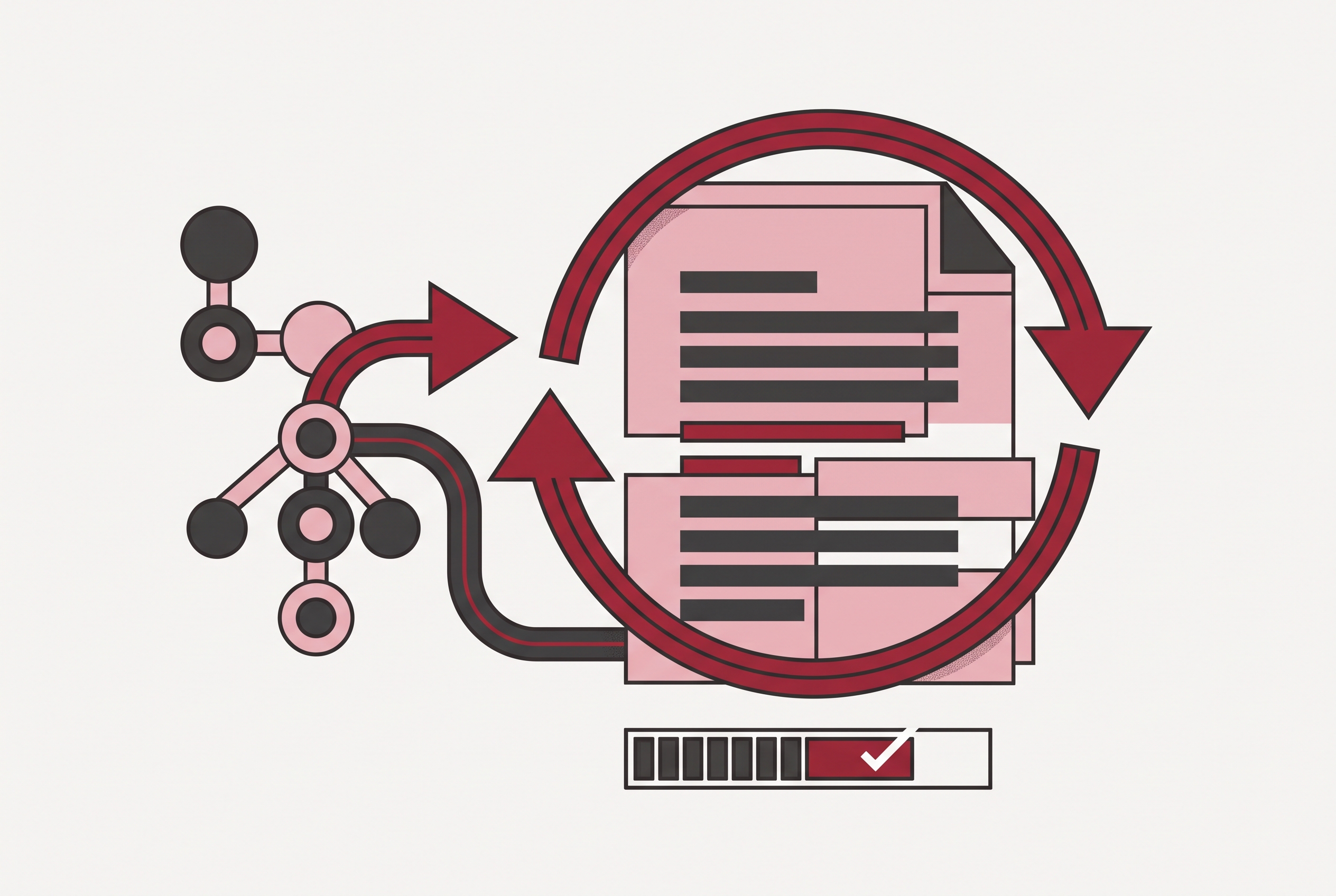
Repo-level generation assumes the problem is absence: no documentation exists yet. Code-coupled documentation assumes the opposite problem: documentation exists, but it has quietly detached from the code it was written to describe, and nobody noticed until the gap had already grown wide. The fix is architectural. Drift gets caught at the pull request stage, where it is cheap to fix, instead of surfacing weeks later during an onboarding session or an incident, where it is expensive.
Swimm defines this category. That anchoring makes it especially well suited to internal engineering documentation, onboarding guides, runbooks, architecture decision records, the kind of material that has to track private, fast-moving code rather than present a stable public face to the outside world.
The honest objection to this architecture is that it cannot start from nothing. The third architecture addresses the moment the code is actually written.
Inline and editor-based generation: documenting at the moment code is written
Inline generation is not a thinner version of wiki generation. It targets a different failure mode entirely: new code that ships without any documentation because no one ever carved out a dedicated moment to write it. Instead of documenting after the fact, inline tools generate docstrings, inline comments, and method summaries in the editor as the code is written, so the documentation and the code are produced in the same breath, with no gap between them for drift to exploit.
GitHub Copilot is the most widely deployed AI documentation tool in 2026, and it earned that position almost by accident: it was not built as a documentation product, but it generates documentation as a side effect of assisting with code. It produces docstrings in whatever format the language expects, JSDoc for JavaScript, Google-style or NumPy-style for Python, XML summary blocks for C#, drawing on full file and test context to do it. It generates a point-in-time artifact, and whatever happens to that artifact next is someone else's job.
That division of labor is the correct way to think about inline tools generally. Solving for the moment of creation says nothing about whether an AI agent can later find, query, or trust what got created, which is the question the next section takes up.
How MCP changes "good documentation" for all three architectures
The Model Context Protocol has given every documentation tool a second audience that did not exist at this scale before: AI coding agents that query documentation programmatically in the middle of a task, rather than a human opening a browser tab to read a page. A wiki that a person can read comfortably but that an agent cannot query in a structured way is now incomplete, regardless of how well written its prose is.
As agent-generated queries against documentation grow as a share of total traffic, the design priority for any team whose engineers work alongside AI assistants shifts to match. Several tools across all three architectures have already built for it. CodeWiki 2.0 exposes its analysis toolchain through codewiki mcp, reaching Cursor, Claude Desktop, Claude Code, and CodeBuddy. repowise ships ten MCP tools natively, covering overview, context, symbol lookup, semantic search, risk scoring, dead code detection, and direct answer generation. DeepWiki runs an official MCP server that lets agents including Cursor, Claude Code, and Claude Desktop query repository knowledge directly. DocuWriter.ai exposes an MCP server reaching Claude Code, Cursor, ChatGPT, and VS Code.
Tools without an MCP layer, including Copilot's inline mode and first-generation static wiki generators, produce documentation that an agent simply cannot see on its own. A human has to manually paste that documentation into a prompt for the agent to see it, which defeats much of the purpose of having generated it. As AI search agents become a meaningful source of traffic alongside direct MCP calls, Mintlify's llms.txt is one concrete implementation of agent-readability, showing that MCP support is not something only one vendor offers.
MCP support answers whether an agent can read the documentation. It says nothing about whether a team is allowed to send its source code to the infrastructure that makes that reading possible in the first place, and that question cuts very differently depending on which architecture a team has chosen.
Data residency and the privacy trade-off that changes the decision for regulated or proprietary codebases
For any team working with proprietary or regulated code, the first question is not which architecture fits best but whether a given tool requires sending source code to a third-party cloud at all, and what that dependency means if it does.
SaaS-hosted tools, DeepWiki for private repositories and Mintlify among them, index and serve code from vendor infrastructure. For most startups and open-source projects, that arrangement is perfectly acceptable. The self-hosted alternative keeps code fully on-premises: repowise is open-source under AGPL-3.0 and self-hosted, giving a team full control over where its data lives, and its keyless first pass, repowise init --no-prose, means the LLM call itself can be deferred indefinitely or routed to a private endpoint.
That keyless-first-pass pattern, available in repowise's --no-prose mode and in CodeWiki's dependency-graph-only mode, gives regulated teams a path to documentation that is deterministic and auditable without a single call to an external LLM, an option that SaaS-hosted tools structurally cannot offer no matter how their pricing changes. In practice, the open-source tools in this space are run from the command line with standard installs, and for any team that already runs CI infrastructure, the marginal cost of adding one more self-hosted process is low.
Data residency is a constraint a team has to clear before anything else, not a measure of which tool produces better documentation. Once that constraint is resolved, the remaining question is whether the documentation a tool produces is actually accurate, and that question finally has an independent answer.
The first peer-reviewed benchmark for repo-level documentation quality
The long-standing objection to auto-generated codebase wikis, that they hallucinate relationships and drift from the code they claim to describe, has been real since the category began. What changed in 2026 is that the objection moved from anecdote to measurement. The CodeWiki paper, presented at ACL 2026 by Anh Nguyen Hoang, Le-Anh, and Bui, working primarily out of FSoft-AI4Code, introduced CodeWikiBench, the first peer-reviewed benchmark built specifically to assess repository-level documentation quality. Before this benchmark existed, claims about which tool produced more accurate documentation had no shared standard to be measured against.
The benchmark also has a clear boundary. It covers only repo-level generation. It says nothing about whether code-coupled tools like Swimm or inline tools like Copilot produce more accurate documentation in aggregate, and those two architectures remain unquantified by this or any comparable study so far. Quality evidence now exists for one of the three architectures, with real limits attached to it, and that is the backdrop against which the actual decision gets made.
Matching architecture to failure mode: a decision framework for choosing the right tool
Most teams, if they are honest about it, have more than one failure mode running at once, so the strongest documentation setups combine architectures.
If the failure mode is a large or inherited codebase with no documentation to speak of, repo-level generation is the correct first move. CodeWiki is the right choice for a team that wants open-source, self-hosted operation with peer-validated quality and incremental updates, particularly for codebases leaning on C, C++, Kotlin, PHP, Ruby, or Scala, and Rust. repowise fits teams that also want Git intelligence, hotspots, bus-factor risk, co-change patterns, pulled from commit history, combined with MCP-native agent integration and full data control. DeepWiki is the fastest path for a public codebase that needs a browsable wiki immediately, with the understanding that private repository support routes through Cognition's own infrastructure.
Certain constraints override architectural preference. Where agent-readability is required, MCP support needs to be verified before committing to anything, and CodeWiki, repowise, DeepWiki, DocuWriter.ai, and Mintlify all expose MCP endpoints today. Where the need is public-facing developer documentation, API references and docs sites meant for external readers, Mintlify is the right tool for that job specifically, since it is a documentation platform with AI authoring assistance rather than a code-to-docs generator, a different problem from any of the three architectures described above.
The common mistake is picking whichever tool has the loudest marketing without first diagnosing which failure mode it was built to solve, then abandoning it when it fails to fix a problem it was never designed to address.